

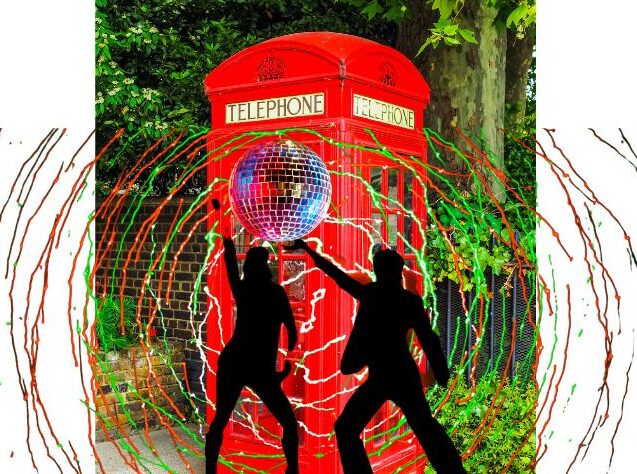
- An innovative choice for adopted box No. 5000.
The traditional red phone box has fallen from use with the advent of mobile phone networks. Usage plummeted by 96% when mobiles arrived. So the challenge has arisen to decide what to do with the old village boxes. In 2008 British Telecom offered an ‘Adopt a Kiosk’ scheme for communities to think outside the box and repurpose the iconic red telephone box. To date over 6600 boxes have been adopted by communities under the scheme.
Charities and local councils can adopt the boxes and develop them for the communities they stand in. Phone boxes are often centrally placed in villages or near houses and so provide a great focus for mini projects.
The best idea for a repurpose has to go to the nightclub project in Kingsbridge.
It may be the smallest in the country – but in Fore Street, Kingsbridge, in Devon, the local red phone box has been converted into a full-blown nightclub. It comes complete with a glitter ball and flashing lights and optional playlist.
 The Kingsbridge nightclub was the 5000th adopted phone box from BT. And previously the phone box had been known on that site for 60 years. Enthusiastic clubbers must be neat dancers as there is only space for two. And tracks cost £1 a go – raising funds for a local charity working with people with learning difficulties. Don’t bank on a late night, though as its lights out at 10 pm.
The council are pleased that such an eye-catching, innovative use has been made of the box.
Phone boxes have been converted into many other projects too.
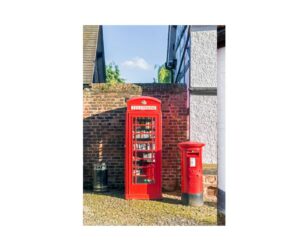 The Council in Hennock chose a Mini Library scheme, refurbishing the box, and making it waterproof to hold a variety of books . The people of Hennock already made good use of the local library and so this became an extension of the same.
Chudleigh Knighton went for a Phone box museum, displaying items associated with the village- old photos and maps and recording features about the village. This detail provides a better understanding on village life and community engagement.
A common diversification for many phone boxes has been to house defibrillators. Such public access defibrillators often prove vital in saving lives when some one collapses in cardiac arrest . Rapid action in short time is key. Red phone boxes are easily recognisable and still feature on OS maps and satnavs. So the locations are great choices here.
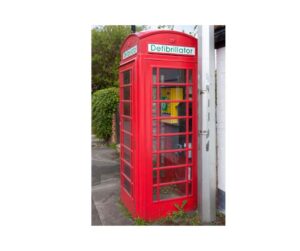 In South Tawton, the Parish Council have used several boxes to house defibrillators. These boxes are part of the over 1000 boxes that have been converted up and down the country to house defibs, through the Community Heartbeat Trust. And BT charge just £1 to adopt a box for projects.
On a different note, Brixham chose to convert 2 phone boxes to “Telebug Hotels”. Now they are havens for bugs and wildlife. Inside the boxes are pine cones , sticks and bark . Whilst on the outside, planters are suspended with pollinator friendly plants.
In Moretonhampstead, phone-boxes have been repurposed as showcase spots for local talent and skills. The first event was an art exhibition by local artist, Lucy Patrick.
Others find use spreading tourist information or emergency groceries.
Communities have found multiple ways to preserve the red phone box, but the one attracting attention for individuality is surely the Devon Nightclub!