

- How to see a hill climb as a positive fitness experience.

My Devon life has taught me that everywhere I walk I encounter a hill. My great enjoyment in life is walking miles around the Devon coast and countryside with my two dogs Otto and Barbara. And every route along the coastline around Dartmouth requires a hill climb. I’ve decided to checkout the health benefits of walking up and down hills. And my conclusion? – Do it! It’s a winner!
So why do the experts say walking up hills is worth the extra effort? There are many walking clubs throughout the UK andmost have participants of mixed ages who are happy, social, active and of normal to thin body size. That’s without any scientific explanation.
Walking is, of course, a cheap way of achieving aerobic exercise and an all-rounder for general health management, improved fitness, and weight control. But why walk up and down hills??
Striding out on the flat is a positive move in all kinds of areas of life – reducing therisk of type 2 diabetes, helping asthma management, heart disease and looking after mental well-being. It’s just not a particularly efficient form of exercise for the time you spend doing it.

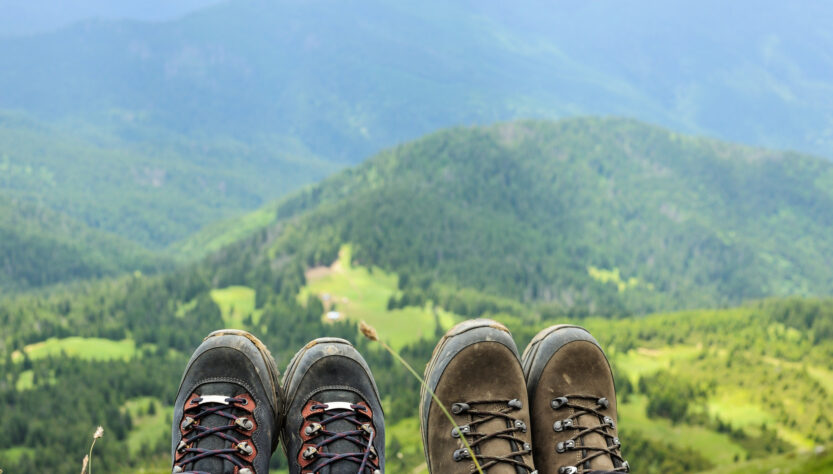
But throw in walking up hills and it’s a bonus life hack – you get the intensity of running without the dread of doing it or impact on your joints ! Simply moving in a vertical direction forces people to work with more effort. And you get to look out on great views, like looking down over Dartmouth from Jaw Bones or Ridley Hill.
The added benefits of climbing hills are many fold, number one being raising your intensity of exercise – a 5% incline can mean an extra 17% increase in calories burnt.
Starting from the top down –
In your head – climbing hills needs your focus and determination, sharpening mental health, forgetting day to day worries, literally “climbing out of depression“ for some folks.
Healthy heart and lungs – inevitably your heart rate increases with hill walking, tending to your muscles and their increasing oxygen needs. Even if you don’t walk any faster, merely walking up hill will increase your workout. Your heart trains harder, you breath deeper using a larger volume of your lungs, particularly the lower lung lobes and you train your rib cage muscles to move for the increased exercise, meaning a quieter respiration at rest.
Fat is even consumed out of the chest and airways so you can take deeper breaths and make room for more oxygen.

For muscles and limbs, here comes the added benefits of strength and flexibility.
Uphill walking resistance demands more from core, lower back and leg muscles. Your glutes, hamstring and calf muscles become trimmed and stronger as each group needs to contract to get you to the top of a hill. And proper use of limb muscles means better strides and protects against bad posture and back pain.
Joints strengthen as a knock on effect – particularly the ankle joints , leading to better balance and posture over uneven grounds, but without the hard impact of running. Great for arthritic joints and managing osteoporosis bone density.
Welcome to Devon hills and even if the view is poor at the top , just think of the health benefits of getting there !
1 May, 2023