

– A secret life with S o E
I think it’s a feature of getting older, but my curious mind wanders when I see older people in the Community – just wondering where their life and career took them.
One such person was humble Eileen Nearne , who lived a quiet life and her final years in Torquay in Devon. Eileen was quiet and reclusive, living away from the community with her cats. Sadly Eileen passed away in 2010. And no one really noticed.
But Eileen left behind a lifetime of bravery and quiet service, that most folks never knew until she had passed.
Eileen Nearne took her secrets with her as a brilliant Special Operations Executive, who endured capture and torture by the Nazis . And was awarded the Croix de Guerre honour.
 In 1921, Eileen was born in London, and moved to France with her family in 1923.
Come 1940, when Nazi Germany had invaded, the Nearnes joined refugees trying to flee the country via Spain.
In 1942 Eileen was back in England with her sister Jacqueline, where they joined the First Aid Nursing Yeomanry. From their French start, both girls were bilingual.
Both girls’ language skills made them candidates for the Special Operations Executive, SOE’s independent French section. They suited the request well with their determination, discretion, and loyalty to France. Eileen was sent for SOE training in both Inverness and then Beaulieu, before being parachuted into France in 1943.
Eileen spent 14 months as a courier on the “Stationer”, travelling thousands of miles through central France, with messages, arms, and money for the SOE effort. She initially trained as a Cipher Clerk, ahead of passing radio training and being selected by Maître Jean Savy (“Wizard”), a French army commander, as a Parisian Radio Operator. The city had become very exposed to danger and leaks and was a dangerous place for such sensitive work, with the planning of the impending allied invasion. Wizard created safe houses for Allied troops and helped finance the resistance.
Eileen was to provide radio contact for London and her codename was “Rose”. Eileen refused to be sent home when the work was deemed too dangerous and stayed focussed on her main mission of raising money and keeping the wireless link open to London.
She had found a deserted house at Bourge -la-Reine in a southern Paris suburb and stayed behind to transmit, whilst her boss, Savy, had discovered critical intelligence that he took back to England in person – a large cache of Rocket warheads – doodlebugs, – that was being prepared for launch against the British.
Eileen continued to transmit wirelessly for 5 months, increasingly aware that the Germans were improving their message interception. After each message was sent to London, Eileen changed location. She lived a quiet, lonely life, living under a false name and rarely met anyone working on her side.
One fateful day in July 1944, when Eileen had sent her 105th message, she heard German sirens outside and quickly burned her notebook and tried to hide her equipment. But the Gestapo burst in and her cover was blown.
And so Eileen was taken to the Parisian Gestapo headquarters, stripped and tortured to interrogate her. Courageously, she never divulged any information and was forcibly taken to Ravensbruck Concentration camp where she endured such inhumane treatment, but once more never spoke.
As Allied forces drew near to the camp in 1945, Eileen chanced her opportunity to escape with two other French women, and dodged a German patrol before making their way to Leipzig , where a Catholic priest hid them in a church bell tower until American troops liberated the City on 15 April 1945 and learned her story.
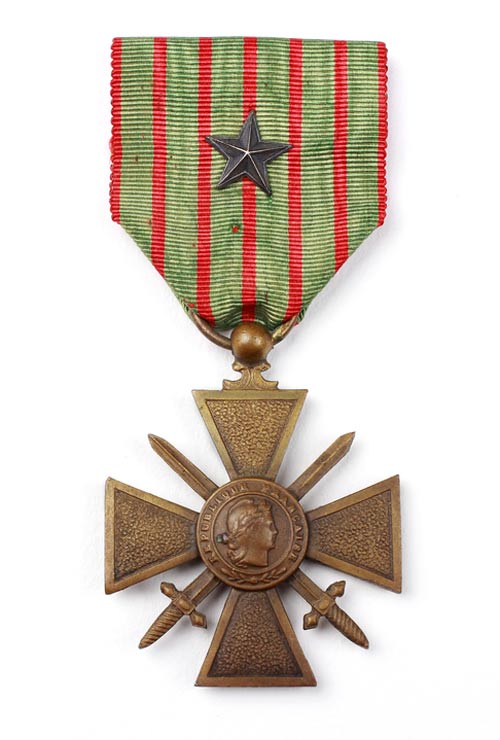 Eileen received the French Croix de Guerre medal for her work , and was also made an MBE by King George VI.
But the torture and Gestapo left such lasting damage for Eileen, which she could never leave behind. She returned to England with her sister Jacqueline. And when Jacqueline died in 1982, Eileen moved to Torquay,
She gave a rare interview in 1997 about her life and SOE, speaking in French and wearing a wig. And, for the interview, Eileen insisted on being called her code name “Rose”.
On 2nd September 2010, Eileen died at the age of 89. It wasn’t until her affairs were being settled that the truth of Eileen’s courage came to light. She finally got some recognition by Torbay dignitaries and the Community at her funeral. TV and news reporters crowded the catholic church at her funeral and Torbay council had to close roads, such was the recognition of this heroine’s story.
Two picket boats from Dartmouth’s Britannia Naval College later committed her ashes to the sea near Thatchers Rock, a part of the coastline that Eileen cherished dearly.
In further tributes, Prince Charles unveiled a monument in Eileen’s memory at RAF Tempsford in Bedfordshire and a Blue Plaque was mounted a year after Eileen’s death at her Lisburne Crescent home in Torquay.
What a life she lived.
Julie Gray
13 Feb, 2023